Lash Retention Problems That Aren't Your Adhesive
Tags: retention, troubleshooting, technique, quality
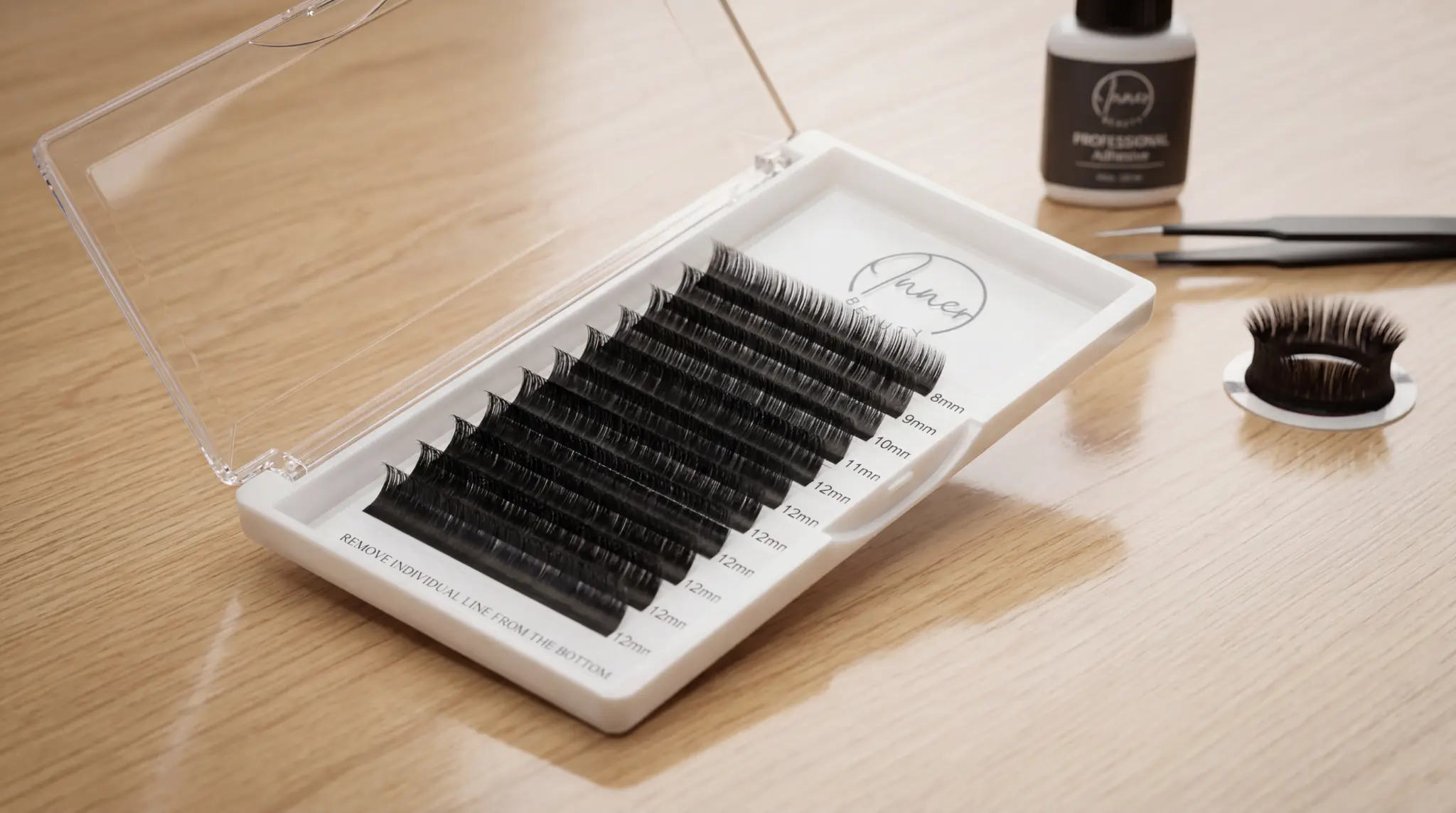
When Retention Drops and the Glue Isn't the Problem
Every lash artist has that week where fills come back early, fans pop off at the tips, and clients text you photos of lashes on their pillowcase. The instinct is to blame the adhesive — switch brands, adjust humidity, buy a new bottle.
Sometimes that's the right call. But more often than you'd think, the retention problem is upstream of the glue. It's in the lash selection, the isolation, or the manufacturing quality of the extensions themselves.
Here's how to diagnose retention issues that have nothing to do with your adhesive.
Diameter Too Heavy for the Natural Lash
This is the most common cause of early lash loss that gets blamed on adhesive. The extension is simply too heavy for the natural lash to support through a full growth cycle.
What it looks like: Extensions fall out with the natural lash still attached (you can see the bulb). The client loses lashes in clusters rather than evenly. Retention is worse on the outer corners where natural lashes are finer.
What's actually happening: The weight of the extension is pulling the natural lash out of the follicle prematurely. The bond is fine — the natural lash just can't carry the load for 4–6 weeks.
The fix: Drop one diameter. If you're using 0.15mm classic, try 0.07mm on the finer natural lashes (inner corners, bottom of the lash line). For volume, if 0.05mm 5D fans are too heavy, switch to 0.03mm — you can fan wider without adding weight.
A general rule: the extension + fan weight should never exceed the natural lash's own weight. If you're not sure, err lighter. A slightly thinner extension that stays on for 5 weeks beats a dramatic extension that falls off in 2.
Curl Mismatch With Natural Growth Angle
What it looks like: Extensions twist or rotate on the natural lash within the first week. The set looks good at application but "messy" by day 3–4. Individual lashes point in different directions.
What's actually happening: When the curl of the extension doesn't follow the natural growth direction, it creates torque at the bond point. The extension wants to curve one way; the natural lash grows another. That constant tension weakens the bond over time and causes rotation.
The fix: Match your curl selection to the natural lash's growth angle, not just the client's desired look. Straight-growing natural lashes can support D curl because the extension curves away from the lid cleanly. But if natural lashes already curve upward, a D curl extension creates a sharp angle at the base that fights the natural direction.
For clients with varied growth angles across the eye (common — inner lashes often grow differently than outer), use mixed curls rather than forcing one curl across the entire set.
Poor Isolation
What it looks like: Multiple extensions fall out together. You find 2–3 lashes stuck together when they shed. The client reports discomfort or "pulling" sensation.
What's actually happening: Two or more natural lashes were bonded together during application. When one natural lash enters its shedding phase, it pulls the neighboring lash (and its extension) out prematurely. This looks like poor retention but it's actually a sticking issue.
The fix: This is technique, not product. But lash quality plays a role — extensions with poor strip adhesion that release multiple lashes at once from the tray make clean isolation harder. If you're pulling 2–3 lashes off the strip together, the strip bonding is the issue.
Also check your adhesive amount. Too much glue at the base creates a larger bond area that's more likely to touch neighboring lashes before it cures.
Inconsistent Fiber Quality Between Trays
What it looks like: Retention is great for a few weeks, then suddenly drops — even though nothing else changed. Same adhesive, same technique, same humidity. But you opened a new tray.
What's actually happening: The new tray is from a different production batch — or a different manufacturer entirely. The fiber grade, curl memory, or surface texture is slightly different, which changes how the adhesive bonds to the extension.
This is more common than most artists realize, especially with suppliers who source from multiple manufacturers or switch factories based on price. The trays look identical in the packaging. They don't perform identically on the lash bed.
The fix: Work with a supplier who uses a single, consistent manufacturer. Ask directly: "Do you source from one factory or multiple?" If they can't answer clearly, assume multiple. Consistent SKU formatting and packaging are good signs — random product codes that change every few months are not.
When you find a tray that performs well, note the lot number or purchase date. If the next order performs differently, that's your signal that something changed in the supply chain.
Curl Memory Loss
What it looks like: Extensions look great at application but gradually straighten over 2–3 weeks. The set appears to "droop" even though the extensions are still attached. Clients say their lashes "lost their curl."
What's actually happening: The PBT fiber isn't holding its curl shape under normal conditions (humidity, body heat, sleeping). This is a manufacturing quality issue — specifically, the heat-setting process during production wasn't sufficient to lock the curl permanently.
The fix: This isn't something you can solve with technique. It's a product quality issue. Heat-bonded lashes from a consistent manufacturer hold their curl through the entire wear cycle. If your extensions are losing curl, the fiber grade or heat-setting process is subpar.
Test this before committing to a supplier: apply a few extensions, wait two weeks, and check if the curl has relaxed. Good-quality PBT should look the same at week 3 as it did at application.
Environmental Factors That Mimic Adhesive Issues
Before switching adhesives, rule out these environmental causes:
- Client's skincare routine: Oil-based cleansers, retinol, and certain moisturizers break down cyanoacrylate bonds. Ask what they're using around their eyes.
- Sleeping position: Side and stomach sleepers compress extensions against the pillow nightly. This doesn't break the bond — it bends the extension until it snaps at the base.
- Heat exposure: Ovens, saunas, and even opening a hot dishwasher can relax curl memory in lower-grade fibers.
- Medications: Thyroid medications, hormonal changes, and certain supplements accelerate the natural lash growth cycle, causing faster shedding that looks like poor retention.
The Diagnostic Sequence
Next time retention drops, work through this before touching your adhesive:
- Are extensions falling with the natural lash attached? → Diameter too heavy
- Are extensions twisting or rotating? → Curl mismatch
- Are multiple lashes shedding together? → Isolation issue
- Did retention change when you opened a new tray? → Inconsistent supply
- Is the curl relaxing over time? → Fiber quality / heat-setting issue
- None of the above? → Now check your adhesive, humidity, and cure time
Most retention problems trace back to lash selection and supply consistency. Getting those right means your adhesive can do its job without fighting upstream issues.
InnerBeauty trays are manufactured for us by a single production source we've worked with for over a decade — same fiber grade, same heat-bonding process, same curl memory batch after batch. 236 SKUs in stock, $8/tray with Pro Access. Browse the catalog.